The Furmanov Belt: Churches and Ethnography
1 day · about 80 km · Ivanovo Oblast
Bibiryevo, Nikolskoye, Pogost, Rogatino and the Nikolo-Shartomsky Monastery: classicism in the fields and living ethnography near Ivanovo.
Description
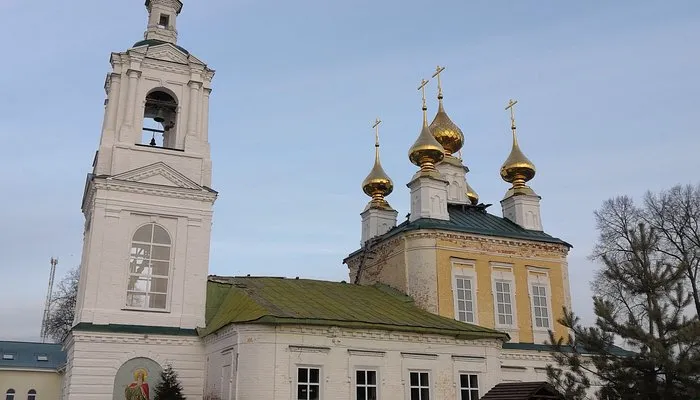
One day north of Ivanovo: a chain of three classicist village churches, an ethnographic museum-reserve and one of the region’s principal spiritual centres. About eighty kilometres by road; the route needs no tourist infrastructure, but it does need self-sufficiency — water, spare time and respect for the cemeteries by the churches. It starts at Bibiryevo with the stone church of the Prophet Elijah of 1828: a four-pillar quadrangle with a bell tower, a landmark by the old road. Then through the fields — Nikolskoye with the church of St. Nicholas of 1854, and Pogost with the church of the Protection of the Mother of God of 1820: three versions of the same classicism, built a quarter-century apart. The cemeteries by the walls are active, and the last kilometres wash out after rain. In Rogatino the route changes theme. Since 2006 an ethnographic museum-reserve has operated here: log-built houses, farm buildings, collections of clothing and household utensils. Allow an hour and a half or two, and check opening hours in advance — a rare point of living ethnography in the region. The finale is the Nikolo-Shartomsky Monastery near Shuya, a monastery known since the fifteenth–sixteenth centuries and returned to the Church in 1990. Today it is an active monastery with cathedral buildings of different ages; tours are possible by arrangement, and modest dress and silence are required. From parish churches to a monastery — the north of Ivanovo Oblast assembles into one very coherent day.
Route points
- 1Church of Elijah the Prophet (Bibirevo)
A 1828 stone church in Furmanovsky district — landmark beside highway R-132.
- 2Church of St Nicholas (Nikolskoye)
A 1854 stone church in Molchanovsky district — large mid-19th-century church.
- 3Church of the Intercession (Pogost)
A 1820 stone church in Furmanovsky district — classical rural temple.
- 4Rogatino Folk Museum-Reserve
A folk culture museum-reserve in Rogatino since 2006 — wooden architecture and Volga-region life.
- 5Nikolo-Shartomsky Monastery
Nikolo-Shartomsky Monastery near Shuya — an ancient convent returned to the Church in 1990.