The Granite Ring of Yekaterinburg
1 день · about 60 km · Sverdlovsk Oblast
Shartash, Isetskoye, Chyortovo Gorodishche and Severskaya Pisanitsa: four stops in one day around the city.
Description
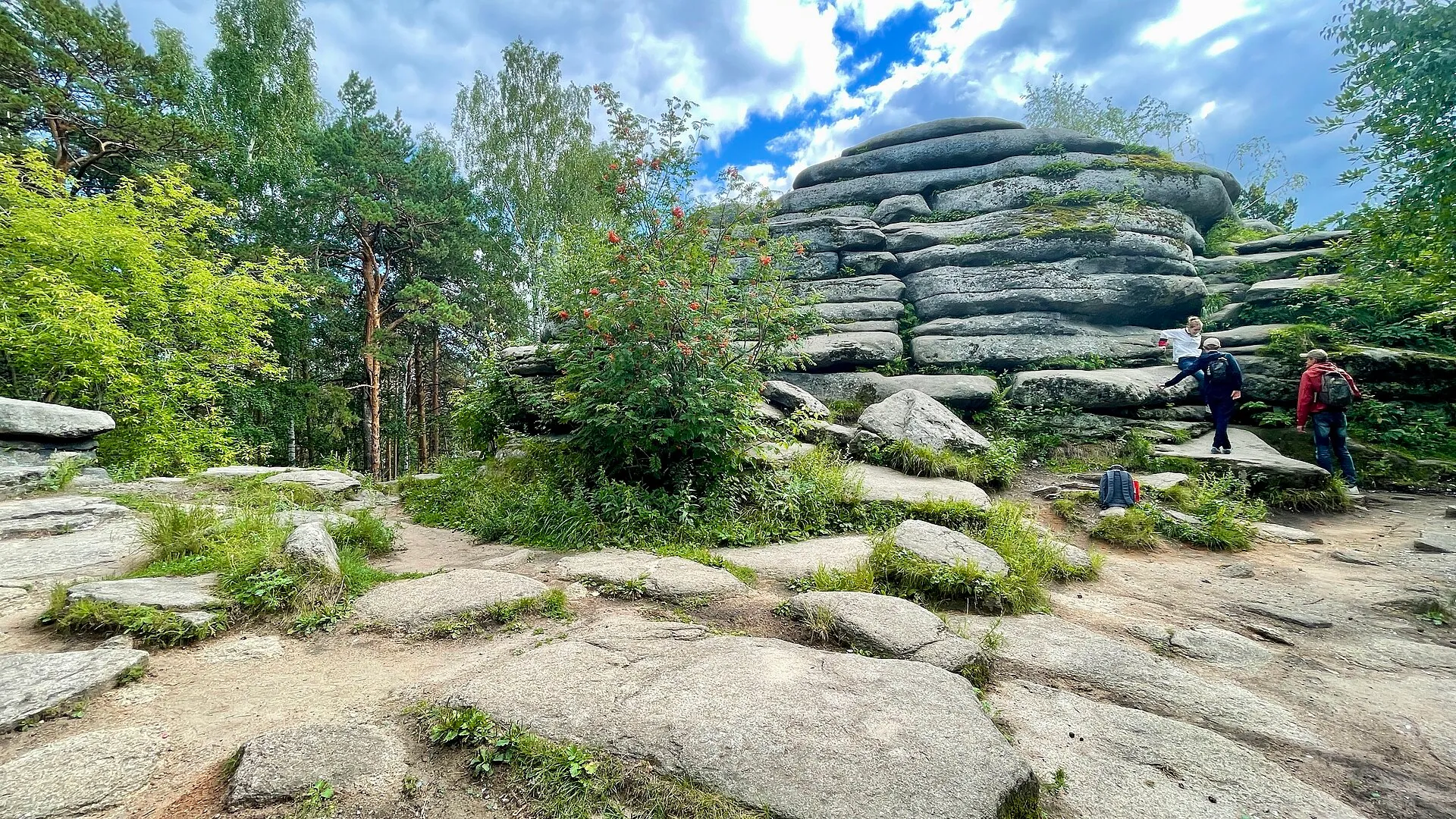
Four stops around Yekaterinburg, united by a single material: the granite of the Verkh-Isetsky massif, about three hundred million years old. City cliffs, a reservoir lake, one of the country’s first climbing grounds and a Neolithic rock-art site form a loop of about sixty kilometres — easy to drive in a day, and some points are reachable even by suburban train. Start on the eastern edge of the city at the Shartash Stone Tents: a ridge of granite outliers up to twenty-four metres above Lake Shartash, stacked like “mattress” slabs. The place is rich in archaeology: up to ten settlements and camps are known on the shores of Shartash, the earliest from the third millennium BC, and in the early twentieth century the cliffs hosted workers’ May Day rallies where Yakov Sverdlov spoke. The road then runs northwest to Isetskoye Lake, the source of the Iset River: a shallow body of water with the Solovetsky, Krasnenky and Kamenny islands, sandy beaches near Koptyaki, and a mysterious rock-art panel — ancient ochre images flooded when the water level rose. The second half of the day belongs to the cliffs west of the city. Chyortovo Gorodishche, a seventy-metre ridge with slabs up to thirty-four metres high, has been a climbing ground since the 1960s: its north wall carries routes of the highest international difficulty grades. Seven kilometres away, near the settlement of Severka, lies Severskaya Pisanitsa: in 1985 schoolteacher Viktor Pronin noticed traces of ochre on the granite slabs, and today you can make out a large hoofed animal caught in a drive-hunting net and a flock of waterbirds created in the third millennium BC. Climbing the cliffs themselves is neither necessary nor allowed: the tents and the pisanitsa are protected monuments, and the views are good from the foot.
Route points
- 1Shartash Stone Tents
Granite tent-shaped rock outcrops by Lake Shartash within Yekaterinburg city limits — a nature monument and a federal cultural heritage site.
- 2Isetskoye Lake
A lake-reservoir half an hour from Yekaterinburg: a flooded rock-art site on an island, settlements from the Neolithic to the Iron Age, and scenic rocky capes.
- 3Chertovo Gorodishche
A tower of granite slabs 20 km from Yekaterinburg — a nature monument and the Urals' oldest climbing crag with routes graded 6a–7c+.
- 4Severskaya Pisanitsa
Neolithic rock paintings on granite cliffs near the settlement of Severka: a deer in a hunting net and a flock of ducks, drawn in ochre in the 3rd millennium BC.