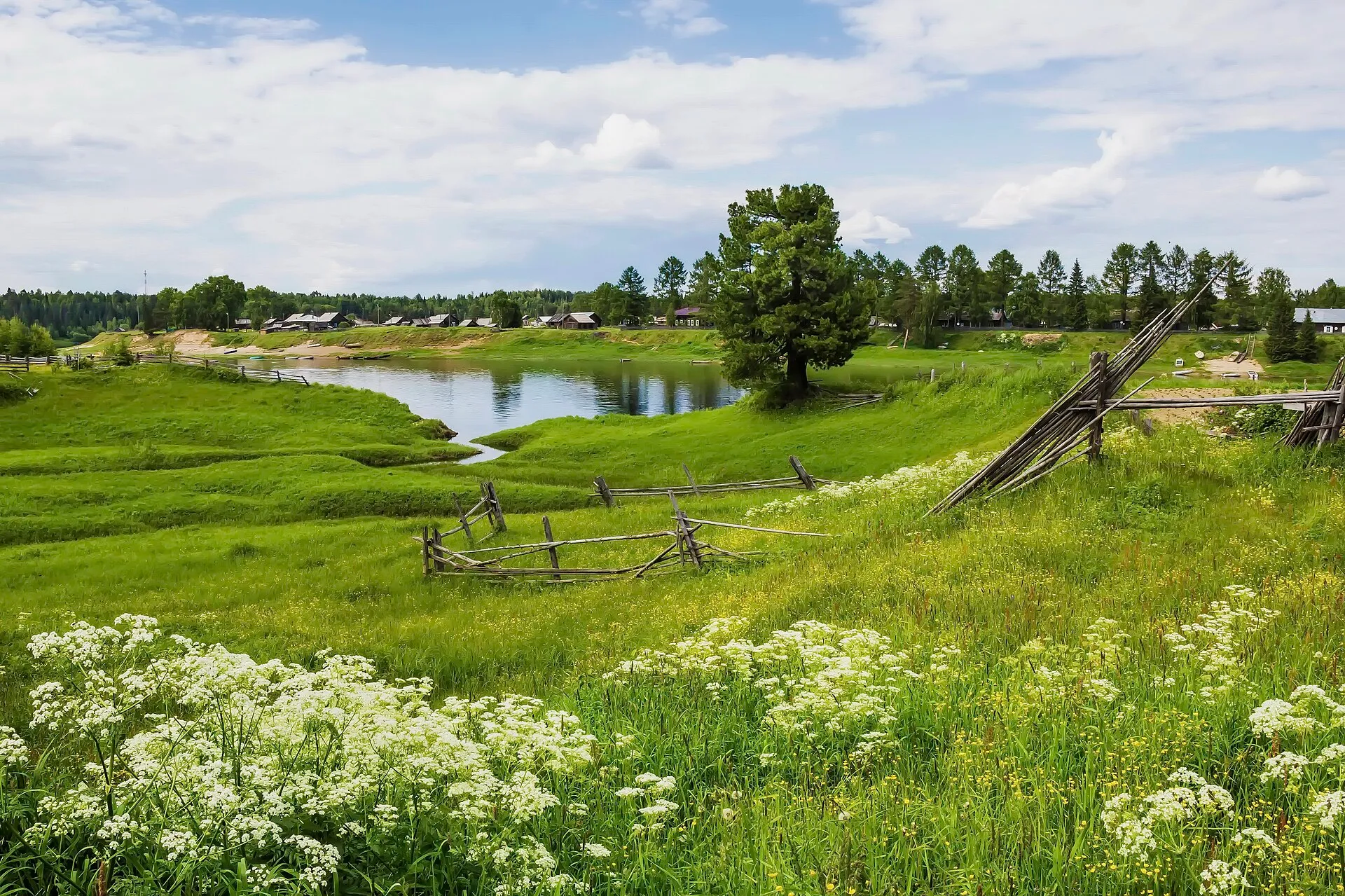
To the Pechora: Troitsko-Pechorsk and the Reserve
2–3 дня · about 100 km as the crow flies · Komi Republic
A dead-end station on the Pechora and the Pechora-Ilych Nature Reserve with the world’s first moose farm — the road to the strictest taiga.
Description
A journey to one of the country’s oldest nature reserves: by train or car to the dead-end station of Troitsko-Pechorsk, then — with the administration’s approval — by helicopter or boat to the settlement of Yaksha. Allow two or three days with a margin: the roads to the reserve are unpaved and weather-dependent. Troitsko-Pechorsk stands on the left bank of the Pechora at the mouth of the Severnaya Mylva. Its documented history began in 1674 with the Kuzminsky homestead; legend has it that a Trinity hermitage stood on this spit as early as the late fourteenth century. In the nineteenth century the village was the centre of Pechora timber logging — local timber was shown at the 1862 World Exhibition in London — and during the Civil War the Troitsko-Pechorsk uprising unfolded here. Today it is the living “gate” to the region’s northeast: the settlement lives on forest and river. The Pechora-Ilych Reserve was created in 1930 to protect sable grounds; today it is over seven hundred thousand hectares of strict protection, a UNESCO biosphere reserve and part of the “Virgin Forests of Komi” World Heritage site. In Yaksha, where the administration sits, the world’s first moose farm has worked since pre-war years — an experiment in domesticating the moose conceived by professor Pyotr Manteyfel; tame moose are shown by appointment, and feeding follows a schedule. The Manpupuner ridge with its legendary stone pillars also stands on the reserve’s territory — but that is a separate multi-day trek requiring serious preparation and gear. Free movement within the reserve is forbidden: visits are arranged in advance through the official website, and excursions start from Yaksha. It is precisely this inaccessibility that explains how intact the wild nature here remains.
Route points
- 1Troitsko-Pechorsk
A Pechora village founded in 1674 with a 14th-century monastery legend — the last dead-end railway station of Komi and the nearest town to the mysteries of the Pechora-Ilych Reserve.
- 2Pechora-Ilych Nature Reserve
A reserve founded in 1930 with the world's first moose farm in the settlement of Yaksha, a UNESCO biosphere status, and the legendary Manpupuner pillars within its territory.