Field Churches of the Suzdal Opolye
1 day · about 120 km · Vladimir Oblast
Bogoslovo, Patakino, Veretyevo, Kideksha and Kibol: from a living 1833 parish to the white-stone twelfth century and collapsing domes.
Description
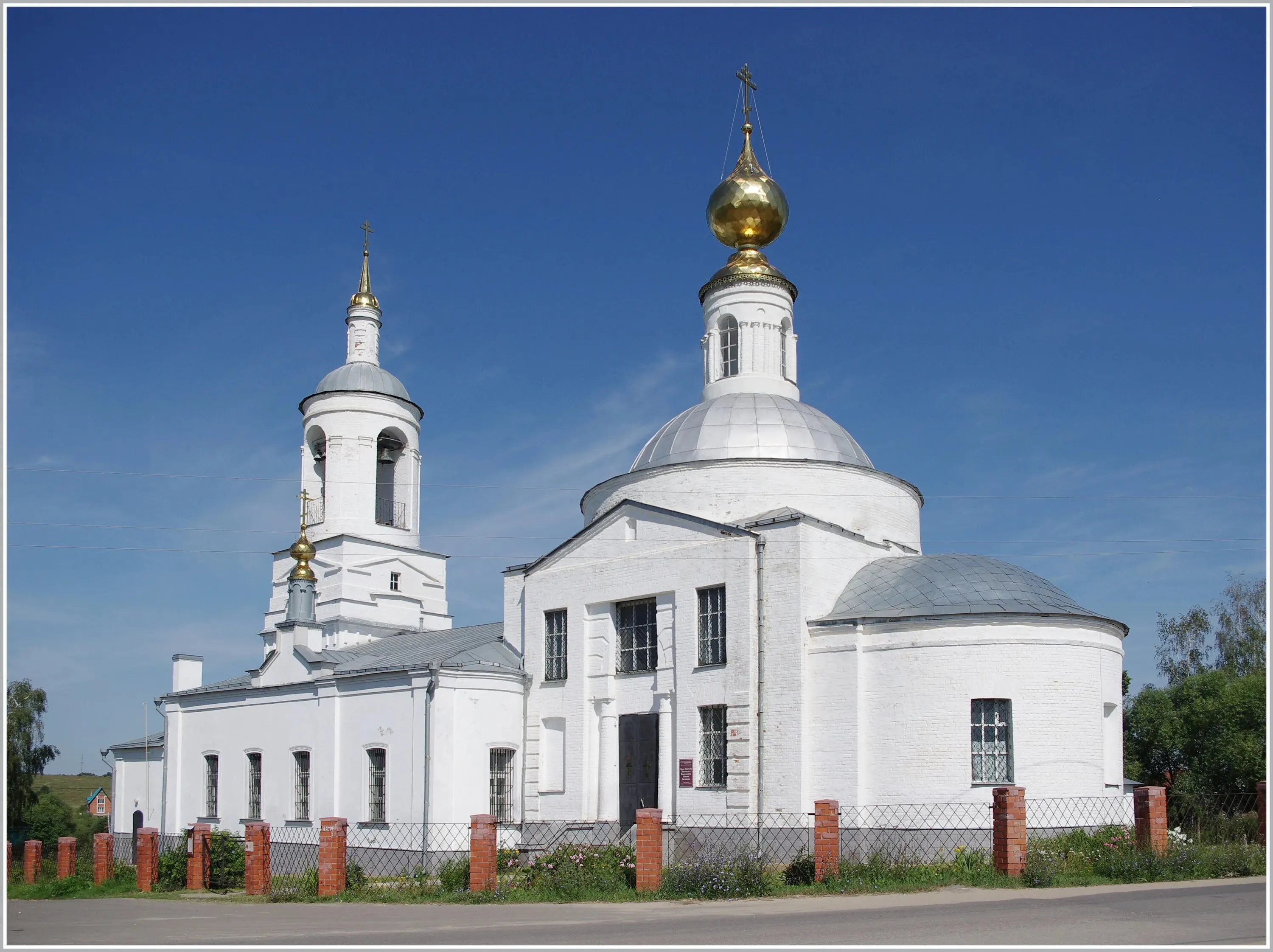
A one-day loop through the lands between Vladimir, Kameshkovo and Suzdal: five churches covering the whole range of rural ecclesiastical architecture — from living classicism to white-stone antiquity and unsafe decay two steps from touristy Suzdal. The roads total about a hundred and twenty kilometres; the last kilometres near the ruins are unpaved. The route begins in the south, at Bogoslovo: a former patriarchal estate mentioned since the sixteenth century, with the church of St. John the Theologian of 1833 — classicism with a bell tower, built by parishioners and still active. The church stands on a rise and dominates the low buildings; the hill opens views over fields and the Popovka River. The road then runs northeast into the Kameshkovo district, where the “field” part begins. Patakino is a typical abandoned Protection church of the nineteenth century: a brick silhouette readable from afar, the roof lost, a cemetery around it — do not enter under the collapsing vaults. Veretyevo is a neighbouring village with a hilltop church around which preservation work has been discussed in recent years: the contrast with Patakino shows how differently the fates of identical rural churches unfold. Toward the end the route returns to Suzdal — but not to the kremlin. Kideksha, a village at the confluence of the Kamenka and the Nerl, keeps the church of Boris and Gleb — one of the few twelfth-century churches to survive almost in its original form; laid down around 1152 in the age of Andrei Bogolyubsky, it belongs to the UNESCO site “White Monuments of Vladimir and Suzdal”. And three kilometres from Suzdal lies Kibol, with the unsafe Nikolskaya church of 1750 and the five-domed church of Florus and Laurus of 1803: empty openings, collapsed domes and fragments of wall painting that must not be touched. The road along the Kamenka has been paved since 2013 — and this contrast, a museum behind the village edge, is the point of the route.
Route points
- 1Church of St John the Theologian (Bogoslovo)
An 1833 classical church on a hill near Suzdal — an active parish without museum queues.
- 2Church of the Intercession (Patakino)
A rural church in Kameshkovsky District — a typical “field” ruin without tourist infrastructure.
- 3Church in Veretevo
A rural church in Kameshkovsky District — among sites under or recently under restoration.
- 4Church of Boris and Gleb (Kideksha)
One of the earliest white-stone churches of north-eastern Rus — 4 km from Suzdal on the Nerl River.
- 5Kibol Church Ensemble
Two churches near Suzdal — St Nicholas (1750) and SS Flora and Lava (1803), derelict on the Kamenka bank.